Lalji Patel
Lalji Patel
  • Home
  • PROCEDURES
    • ENDOSCOPY
    • CLONOSCOPY
    • ERCP
    • GASTROSCOPY
    • Sigmoidoscopy
    • Percutaneous Endoscopic
  • TREATMENTS
    • Stomach ulcers
    • Peptic ulcer
    • Pancreatitis
    • Constipation
    • Loose stools or diarrhoea
    • Reflux
    • Jaundice
    • cirrhosis
    • Gas Trouble
    • Abdominal Pain
    • Gallstones And CBD Stone
    • colon cancer
    • Ulcerative Colitis
    • Hematemesis
  • About
  • More
    • Home
    • PROCEDURES
      • ENDOSCOPY
      • CLONOSCOPY
      • ERCP
      • GASTROSCOPY
      • Sigmoidoscopy
      • Percutaneous Endoscopic
    • TREATMENTS
      • Stomach ulcers
      • Peptic ulcer
      • Pancreatitis
      • Constipation
      • Loose stools or diarrhoea
      • Reflux
      • Jaundice
      • cirrhosis
      • Gas Trouble
      • Abdominal Pain
      • Gallstones And CBD Stone
      • colon cancer
      • Ulcerative Colitis
      • Hematemesis
    • About
  • Sign In
  • Create Account

  • Bookings
  • My Account
  • Signed in as:

  • filler@godaddy.com


  • Bookings
  • My Account
  • Sign out

Signed in as:

filler@godaddy.com

  • Home
  • PROCEDURES
    • ENDOSCOPY
    • CLONOSCOPY
    • ERCP
    • GASTROSCOPY
    • Sigmoidoscopy
    • Percutaneous Endoscopic
  • TREATMENTS
    • Stomach ulcers
    • Peptic ulcer
    • Pancreatitis
    • Constipation
    • Loose stools or diarrhoea
    • Reflux
    • Jaundice
    • cirrhosis
    • Gas Trouble
    • Abdominal Pain
    • Gallstones And CBD Stone
    • colon cancer
    • Ulcerative Colitis
    • Hematemesis
  • About

Account


  • Bookings
  • My Account
  • Sign out


  • Sign In
  • Bookings
  • My Account

CIRRHOSIS


Cirrhosis is a serious condition where normal liver tissue is replaced by scar tissue (fibrosis). It tends to progress slowly and often does not cause symptoms in its early stages. However, as the function of the liver gradually becomes worse, serious problems can develop.

In the UK, the two commonest causes of cirrhosis are alcohol drinking above recommended limits and hepatitis C infection. Treatments may vary, depending on the cause. If cirrhosis becomes severe, a liver transplant may be the only option.

In this article:

  • What      is cirrhosis of the liver?
  • What      does the liver do?
  • Cirrhosis      symptoms
  • What      causes cirrhosis?
  • How      common is cirrhosis?
  • How      is cirrhosis diagnosed?
  • Cirrhosis      treatment
  • Can      cirrhosis be prevented?

What is cirrhosis of the liver?

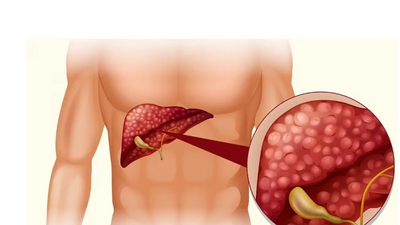
Cirrhosis is a condition where normal liver tissue is replaced by scar tissue (fibrosis).

The 'scarring' tends to be a gradual process. The scar tissue affects the normal structure and regrowth of liver cells. Liver cells become damaged and die as scar tissue gradually develops. Therefore, the liver gradually loses its ability to function well.

The scar tissue can also affect the blood flow through the liver, which can cause back pressure in the blood vessels which bring blood to the liver. This back pressure is called portal hypertension.

What does the liver do?

Liver function

The liver is in the upper right part of the tummy (abdomen). It has many functions which include:

  • Storing      fuel for the body (glycogen) which is made from sugars. When required,      glycogen is broken down into glucose which is released into the      bloodstream.
  • Helping      to process fats and proteins from digested food.
  • Making      proteins that are essential for blood to clot (clotting factors).
  • Processing      many medicines that you may take.
  • Helping      to remove or process alcohol, poisons and toxins from the body.
  • Making      bile which passes from the liver to the gut and helps to digest fats.

Cirrhosis symptoms

In the early stages of the condition, there are often no symptoms of cirrhosis. Livers can continue to function with a reduced number of working liver cells. However, as more and more liver cells die and more and more scar tissue (fibrosis) builds up, the liver:

  • Fails      to make enough proteins such as albumin that help to regulate the fluid      composition in the bloodstream and body.
  • Fails      to make enough chemicals needed for blood clotting.
  • Is      less able to process waste chemicals in the body, such as bilirubin,      leading these to build up in the body.
  • Is      less able to process medicines, toxins and other chemicals which may then      build up in the body.

Therefore, the symptoms that may develop include:

  • Tiredness      and weakness.
  • Fluid      which leaks from the bloodstream and builds up in the legs (oedema)      and tummy (abdomen) - this is called ascites.
  • Loss      of appetite, feeling sick (nausea) and being sick (vomiting).
  • Losing      weight (although it is possible to gain weight if a lot of fluid is being      retained).
  • A      tendency to bleed and bruise more easily.
  • Yellowing      of the skin or of the whites of the eyes (jaundice) due to a      build-up of bilirubin.
  • Itchiness      due to a build-up of toxins.
  • Mental      health changes - these can develop in severe cases as toxins build up in      the bloodstream and affect the brain. This can cause changes to      personality and behaviour, confusion, forgetfulness and difficulty      concentrating. Eventually it can lead to loss of consciousness and hepatic      coma. These changes are known as hepatic encephalopathy.

The scar tissue restricts the flow of blood through the liver and, as the cirrhosis becomes worse, this causes back pressure in the portal vein (known as portal hypertension). The portal vein is the vein that takes blood from the gut to the liver - this is rich in nutrients and also carries any toxins that the liver should be removing from the body.

Increased pressure in this vein can cause swellings (varices) to develop in the branches of the vein in the lining of the gullet (oesophagus) and stomach. These varices have a tendency to bleed easily into the gut. If a bleed occurs, this may cause vomiting of blood or passing altered blood with your stools (faeces) - this tends to make the stools black, tarry and offensive (melaena).

What causes cirrhosis?

There are many causes of 'scarring' of the liver (cirrhosis). In the UK the most common causes are alcohol and infection with the hepatitis C virus.

Alcoholic cirrhosis

Liver cells break down alcohol but too much alcohol can damage the liver cells. As a rule, the heavier the drinking, the more the risk of developing cirrhosis. However, alcoholic cirrhosis is not just a condition of people who have alcohol dependency. People who are drink socially but above recommended limits also develop cirrhosis.

About 1 in 10 people drinking above the recommended alcohol limits will eventually develop cirrhosis. It tends to occur after 10 or more years of excessive drinking. It is not clear why some people are more prone to their liver cells becoming damaged by alcohol and to developing cirrhosis. There may be an inherited (genetic) tendency. Women seem to be more prone than men to cirrhosis although it is still a disease more common in men.

Hepatitis C and cirrhosis

Persistent (chronic) infection with the hepatitis C virus causes long-term inflammation in the liver. This can eventually lead to liver 'scarring' and cirrhosis. Up to 1 in 5 people with chronic hepatitis C develop cirrhosis but this usually takes about 20 years or even longer from the initial infection.

Other causes of cirrhosis

Causes which are less common in the UK include:

  • Chronic      infection with the hepatitis B virus. Worldwide, this is the most      common cause of cirrhosis.
  • Autoimmune      hepatitis. The immune system normally makes antibodies to attack      bacteria, viruses and other germs. In people with autoimmune diseases, the      immune system makes antibodies against part(s) of the body. Something      triggers the immune system to make these autoantibodies but the trigger is      not known. In autoimmune hepatitis, the immune system makes antibodies      against liver cells, which can lead to damage and cirrhosis.
  • Diseases      that cause blockage of the bile ducts can cause back pressure and      damage to the liver cells., for example, primary biliary cirrhosis, sclerosing      cholangitis, and congenital problems of the bile ducts.
  • Non-alcoholic      steatohepatitis (NASH), now called non-alcoholic fatty liver      disease (NAFLD) This is a condition which causes fat to build up in the      liver. This can lead to scarring and cirrhosis. Being overweight/obese increases      the risk of developing NASH.
  • Severe      reactions to certain medicines.
  • Certain      poisons and environmental toxins.
  • Certain      infections caused by bacteria and parasites which are usually      found only in tropical countries. Parasites are living things (organisms)      that live within, or on, another organism.
  • Severe      heart failure which can cause back pressure of blood and      congestion in the liver.
  • Some      rare inherited diseases which can cause damage to liver cells.      For example:


    • Haemochromatosis.       This is a condition which causes an abnormal build-up of iron in the       liver and other parts of the body.
    • Wilson's       disease. This is a condition which causes an abnormal build-up of       copper in the liver and other parts of the body.
  • Other      rare disorders.

How common is cirrhosis?

There are an estimated 30,000 people living with cirrhosis in the UK and at least 7,000 new cases being diagnosed each year. The numbers of people living with both alcoholic cirrhosis and non-alcohol-related cirrhosis seem to be rising.

How is cirrhosis diagnosed?

A doctor may suspect, from symptoms and a physical examination, that there is 'scarring' of the liver (cirrhosis). A doctor may especially think of cirrhosis as a cause of these symptoms if you have a history of heavy alcohol drinking or have had a previous episode of hepatitis.

Blood tests may show abnormal liver function. See the separate leaflet called Liver Function Tests for more details. An ELF blood test can give a good estimation of the degree of fibrosis in the liver and whether further tests for cirrhosis are needed. An ultrasound scan (or a computerised tomography (CT) scan or a magnetic resonance imaging (MRI) scan) may show a damaged liver. To confirm the diagnosis, a small sample (biopsy) of the liver may be taken to be looked at under the microscope. See the separate leaflet called Liver Biopsy for more details. The scarring of the liver and the damage to liver cells can be seen on a biopsy.

If the underlying cause of the cirrhosis is not clear, further tests may be done to clarify the cause. This might involve checking for antibodies to hepatitis viruses, checking for autoantibodies that may have attacked liver cells, looking in a blood sample for excess iron or copper, etc.

Cirrhosis treatment

'Scarring' of the liver (cirrhosis) tends to become progressively worse if the underlying cause persists and is not treated. In general, once the damage is done the scarring is not reversible. Therefore, the aim of treatment is, if possible, to prevent further liver scarring or to slow the progression of the scarring process. Treatments that may be advised include the following.

Stop drinking alcohol

Whatever the cause of cirrhosis, alcohol should be stopped completely. Drinking alcohol will increase the rate of progression of cirrhosis from whatever cause.

Be cautious when taking medicines

It is important that a doctor or pharmacist is aware of the diagnosis of cirrhosis before taking any prescribed or over-the-counter medicines. Some medicines that are processed in the liver may need their dose adjusted and some should not be used at all.

Treatment for underlying causes

Some of the underlying causes of cirrhosis can be treated. This may slow down, or halt, the progression of cirrhosis. For example:

  • Not      drinking alcohol if alcohol is the cause.
  • Interferon      and other medication may be used to treat viral hepatitis.
  • Steroid      medicines or other immunosuppressant medicines may be used to treat      autoimmune diseases causing liver damage.
  • Regular      removal of a pint or so of blood can remove excess iron which occurs in      haemochromatosis.

Treatment to ease symptoms and prevent complications

Various treatments may be advised, depending on the severity of the cirrhosis and the symptoms that develop. For example:

  • Adequate      food intake (including calories and protein) and regular exercise are      important to prevent excessive weight loss and muscle wasting.
  • A      low-sodium diet or 'water' tablets (diuretics) to reduce fluid      accumulating in the body.
  • Medicines      to reduce itchiness.
  • Zinc      deficiency is common in cirrhosis and zinc supplements may      be used.
  • Vaccination      to protect against hepatitis A, influenza and pneumococcal      infections.
  • 'Thinning'      of the bones (osteoporosis) may occur and so prevention and      treatment of osteoporosis are important.
  • Medicines      that may help to reduce portal hypertension.
  • Drainage      of fluid that builds up in the tummy (abdomen) - called ascites.

Treatment of bleeding varices

A bleed from swellings (varices) - described above - is a medical emergency. Seek medical help immediately if you have cirrhosis and:

  • You      bring up (vomit) blood; or
  • You      pass blood in your stools (faeces); or
  • Your      stools become black.

Various surgical techniques can be used to stop the bleeding and to help reduce the risk of further bleeds.

Liver transplant

In severe cases, where the scarring is extensive and the liver can barely function, then a liver transplant may be the only option.

The future

Up until recently, the scarring process of cirrhosis was thought to be irreversible. However, recent research has led to a greater understanding of the scarring process. Some research suggests that medicines may be able to be developed that can reverse the scarring process.

Stem cell or liver cell transplantation aimed at restoring liver function is also being investigated. This research continues.

Can cirrhosis be prevented?

Alcohol

The most common cause of 'scarring' of the liver (cirrhosis) in the UK is alcohol drinking above recommended limits. The most important way to prevent cirrhosis from developing is to drink within the recommended safe limits. That is:

  • Men should      drink no more than 14 units of alcohol per week, no more than four units      in any one day and have at least two alcohol-free days a week.
  • Women should      drink no more than 14 units of alcohol per week, no more than three units      in any one day and have at least two alcohol-free days a week.
  • Pregnant      women. Advice from the Department of Health states that:      "Pregnant women or women trying to conceive should not drink alcohol      at all. If they do choose to drink, to minimise the risk to the baby, they      should not drink more than 1-2 units of alcohol once or twice a week and      should not get drunk."

Where do these recommendations come from?

  • The      Department of Health guidelines on alcohol limits were updated in January      2016. These recommendations come from their guidelines.
  • Some      would argue that the upper limits of the recommendations are too high. For      example, one study found that drinking more than two units a day for men      and more than one unit a day for women significantly increases the risk of      developing certain cancers.

In general, the more alcohol is drunk above these limits, the more harmful alcohol is likely to be.

A unit of alcohol is about equal to:

  • A      half pint of normal-strength beer, cider or lager.
  • A      pub measure of spirits (25 ml) or of fortified wine such as sherry (50      ml).
  • A      small glass (125 ml) of wine containing 8% alcohol by volume.

Note: using the above guide, it is easy to underestimate how much alcohol is in a drink. This is because many beers are now strong and wines are often served in 175 ml glasses. Many wines are also stronger than standard (some contain 12-14% alcohol by volume).

However, it is important not to drink alcohol at all if cirrhosis has already developed or with a diagnosis of chronic hepatitis or certain other liver problems.

Infectious diseases

Some causes of cirrhosis are due to infectious diseases which can often be prevented. For example, people who inject street drugs are at risk of hepatitis B and C if they use unclean needles or other injection equipment. These infections may also be passed on through unprotected sex. Hepatitis B can be prevented by immunisation which is offered to those at risk such as healthcare workers, drug users and people with multiple sexual partners.
Contact Us

Better yet, see us in person!

We love our customers, so feel free to visit during normal business hours.

Message us on WhatsApp & Call

Lalji Patel

Rajiv Gandhi Circle, Sarvanand Nagar, Pipliya Rao, Indore, Madhya Pradesh

glexgastroliver@gmail.com

Hours

Open today

06:00 pm – 08:00 pm

Copyright © 2025 Lalji Patel - All Rights Reserved.

Powered by

This website uses cookies.

We use cookies to analyze website traffic and optimize your website experience. By accepting our use of cookies, your data will be aggregated with all other user data.

Accept